
Introduction
Small properties are becoming an increasingly common reality as urban populations grow and housing costs continue to rise. For many homeowners and renters, limited space does not reflect a lack of ambition or lifestyle needs, but rather a shift toward efficiency and intentional living. A well-designed small property can offer the same level of comfort, functionality, and satisfaction as a larger home when planned thoughtfully.
Maximizing a compact living space requires more than fitting furniture into tight corners. It involves understanding how people move, store belongings, relax, and work within their homes. Every design choice—from layout to lighting—plays a role in shaping how spacious and comfortable a property feels. With the right approach, small homes can feel open, adaptable, and deeply personal.
This article explores practical strategies for transforming small properties into fully functional living environments. By focusing on design, organization, and flexibility, homeowners can unlock comfort and efficiency without compromising style or daily convenience.
Thoughtful Layout Planning and Space Flow
One of the most important aspects of maximizing a small property is planning how space flows from one area to another. Poor layouts can make even moderately sized homes feel cramped, while thoughtful planning allows limited square footage to function efficiently. Open-plan concepts often work well in small properties, reducing visual barriers and encouraging natural movement between spaces.
Clear zoning is essential. Defining areas for cooking, relaxing, working, and sleeping helps prevent overlap and clutter. This can be achieved through furniture placement, rugs, or subtle lighting changes rather than physical walls. The goal is to create a sense of purpose for each area without closing the space off.
Circulation paths should remain unobstructed. Narrow walkways or awkward furniture arrangements can make a home feel smaller than it is. Planning layouts around daily routines ensures that movement feels natural. When layout decisions prioritize flow, small properties become easier to live in and more visually balanced.
Multi-Functional Furniture and Smart Storage
Furniture plays a defining role in how small properties function. Multi-functional pieces allow one item to serve several purposes, reducing the need for excess furniture. Sofa beds, extendable tables, storage ottomans, and wall-mounted desks are examples of solutions that increase usability without occupying permanent space.
Storage should be intentional rather than excessive. Built-in shelving, under-bed storage, and vertical cabinets make use of areas that are often overlooked. Vertical storage draws the eye upward, creating the illusion of height while keeping floors clear. This approach supports smart small property design solutions by balancing accessibility with aesthetics.
Avoiding bulky furniture is equally important. Slim profiles, exposed legs, and modular designs help maintain openness. Choosing fewer, higher-quality pieces often results in a more comfortable and cohesive living environment than filling a space with unnecessary items.
Lighting, Color, and Visual Expansion Techniques
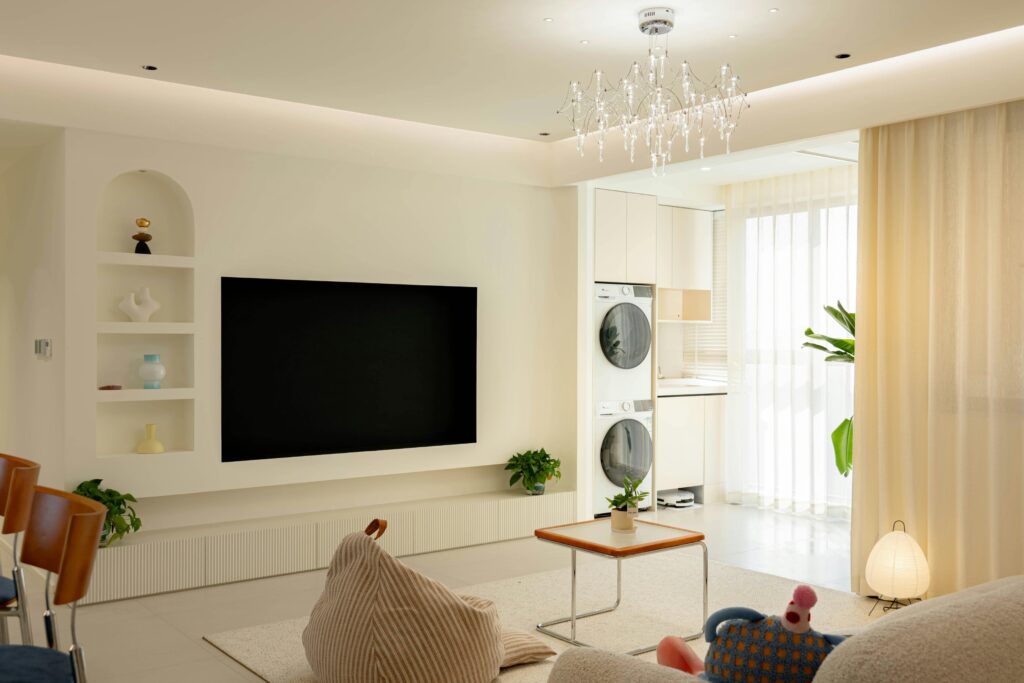
Lighting has a significant impact on how spacious a small property feels. Natural light should be maximized wherever possible by keeping window treatments minimal and unobstructive. Reflective surfaces, such as mirrors and glossy finishes, help bounce light throughout the space.
Artificial lighting should be layered rather than centralized. Combining ambient, task, and accent lighting allows rooms to adapt to different activities and moods. Wall-mounted lights and recessed fixtures free up floor and surface space, reducing visual clutter.
Color choices also influence perception. Lighter, neutral tones tend to open up a space, while darker accents can be used strategically to add depth. Consistency across rooms creates visual continuity, making the home feel larger and more cohesive. These visual strategies enhance comfort without requiring structural changes.
Maximizing Functionality in Key Living Areas
In small properties, key areas such as kitchens, bathrooms, and bedrooms require particular attention. Kitchens benefit from efficient layouts, compact appliances, and organized storage systems. Pull-out shelves, corner solutions, and integrated appliances improve usability without expanding footprint.
Bathrooms can feel more spacious through wall-mounted fixtures, frameless shower screens, and built-in niches. Reducing visual interruptions creates a cleaner and more open appearance. Storage should be concealed wherever possible to maintain simplicity.
Bedrooms should prioritize rest and flexibility. Platform beds with storage, wall-mounted lighting, and minimal bedside furniture free up valuable space. When each room is designed around its primary function, the entire property feels more intentional and comfortable.
Adapting Small Properties to Changing Needs
Flexibility is essential in small property living. Spaces that adapt over time support long-term comfort as lifestyles change. Home offices, guest areas, or hobby spaces can be integrated through fold-away furniture or modular layouts.
Technology also supports adaptability. Smart home systems optimize lighting, temperature, and storage usage. These features improve efficiency while enhancing daily convenience.
For homeowners seeking practical insights for modern living, adaptability ensures that a small property continues to meet needs without constant renovation. Thoughtful design allows a home to evolve alongside its occupants, maintaining comfort and relevance.
Conclusion Maximizing small properties for full-scale living comfort is about intention rather than limitation. With thoughtful layout planning, multi-functional furniture, effective lighting, and adaptable design, compact homes can offer everything needed for comfortable daily living. Small spaces encourage smarter decisions, prioritizing quality, flexibility, and flow over excess. When each element is chosen with purpose, the result is a home that feels balanced, efficient, and welcoming. Small properties are not defined by what they lack, but by how well they support everyday life. With informed choices and creative solutions, limited space becomes an opportunity for thoughtful living rather than a compromise.